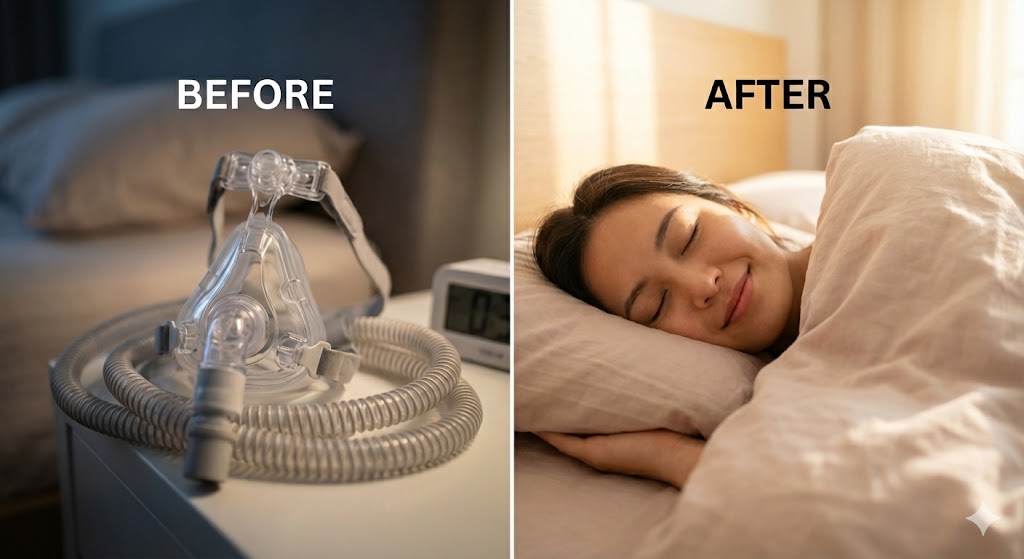
Better Sleep Beyond CPAP
Oral appliances can be an effective option for more restorative sleep.
If you’ve been diagnosed with sleep apnea, CPAP therapy likely came up right away. Though effective, CPAPs can be intimidating and impractical. For many, just the idea of a CPAP machine prevents them from pursuing treatment. It’s common to hear: “I tried it… and I just couldn’t do it.” Masks leak. The noise keeps a partner awake. Travel feels complicated. Or the sensation of forced air makes sleep harder, not easier.
For patients that have concerns about the practicality or logistics of CPAP, oral appliances may be an effective alternative.
CPAP works by delivering air pressure to keep your airway open while you sleep. When it’s used consistently and properly fitted, it can be extremely effective, especially for moderate to severe obstructive sleep apnea.
The challenge is that CPAP only helps if you can actually sleep with it. If you’re wearing it for an hour and taking it off, your airway is still collapsing for most of the night.
A sleep oral appliance works differently. It gently positions the lower jaw forward during sleep, helping keep the airway from narrowing and reducing collapse. For many patients, this can alleviate snoring, reduce obstructive breathing events, and improve sleep quality and daytime energy.
Oral appliances are also quieter, more portable, and often easier for partners.
Oral appliances tend to be a strong option when:
sleep apnea is mild to moderate
symptoms are worse on the back (supine sleep)
the patient is motivated to use a device consistently
anatomy suggests jaw positioning can meaningfully support the airway
That said, there are patients with more severe sleep apnea who still do well with oral appliances, especially if CPAP isn’t realistic.
Sleep apnea and snoring aren’t one-size-fits-all problems, and neither is the solution. The most helpful first step is finding the source of your symptoms. What’s actually driving airway collapse, mouth breathing, clenching, morning headaches, or that unrefreshed feeling? When you understand the “why” behind your sleep and breathing patterns, the right path forward becomes much clearer. Instead of cycling through trial-and-error, you can choose a plan that fits your anatomy and your life and then confirm it’s working with follow-up testing, not guesswork.
It’s not about a debate between CPAP and oral appliances. It’s about what will work best for your life, anatomy, and long-term health.
Don’t let fear or uncertainty about treatment options stand between you and relief. Find the source of your sleepless nights and take the next step toward better sleep.