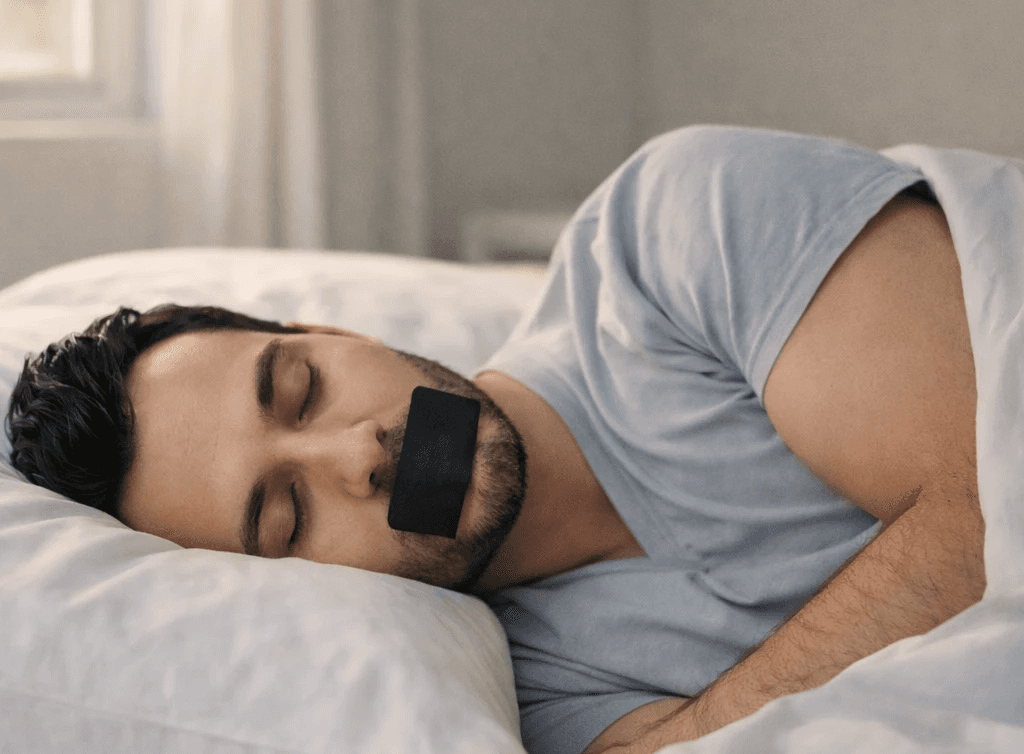
Is Mouth Taping Safe?
Mouth taping has become a popular sleep trend online. But is it safe? Learn when mouth taping may help and when it can actually make breathing problems worse.
Mouth taping has become a major trend on social media.
You may have seen videos claiming that taping your mouth shut while sleeping can improve your breathing, eliminate snoring, and help you wake up feeling more refreshed.
There is some truth behind the trend. Nasal breathing is incredibly beneficial for overall health. Breathing through the nose helps filter the air, humidify it, and even produce nitric oxide, a molecule that supports healthy blood flow and oxygen delivery throughout the body.
But many social media posts leave out an important detail:
Mouth breathing is often a compensation and not the root cause of the problem.
Understanding this distinction is critical before trying mouth taping.
Why Mouth Breathing Happens
Most people assume mouth breathing is simply a bad habit. In many cases, however, it is the body’s way of compensating for a deeper airway issue. When the nasal airway is restricted, the body automatically opens the mouth to maintain adequate airflow.
Common causes of mouth breathing can include:
Nasal congestion or chronic sinus issues
A deviated septum
Enlarged tonsils or adenoids
Narrow airway anatomy
Sleep apnea or upper airway resistance
In these situations, mouth breathing is not the problem itself. It is the body’s backup system for getting enough oxygen.
The Potential Problem With Mouth Taping
When someone with an obstructed airway tapes their mouth shut, they may be removing the only breathing pathway their body has available. That means the body now has fewer ways to maintain airflow during sleep. Instead of improving breathing, mouth taping in these situations can actually make breathing more difficult. This is why blindly following trends online can sometimes lead to unintended consequences.
Mouth taping is not inherently bad. But using it without understanding your airway can be problematic.
When Mouth Taping May Actually Help
In certain situations, mouth taping can be helpful.
If a person has:
A healthy and unobstructed nasal airway
No significant nasal blockage
No airway restriction
Mild mouth breathing habits
Then gentle mouth taping can encourage nasal breathing during sleep.
Some individuals in these situations report improvements such as less snoring, better sleep quality, fewer morning headaches, and feeling more refreshed upon waking. But the key point is that these benefits tend to occur only when the airway is already functioning properly.
Mouth Taping Is a Tool, Not a Diagnosis
Mouth taping is not a universal solution, it is simply a tool.
It does not diagnose airway problems.
It does not correct structural breathing issues.
And it does not address the root cause of mouth breathing.
Before experimenting with mouth taping, it is important to understand why mouth breathing is happening in the first place. That usually requires a comprehensive airway evaluation. Airway-focused dentistry looks beyond symptoms to understand how breathing, sleep, jaw structure, and airway anatomy interact.
Instead of simply masking symptoms, the goal is to identify the underlying factors contributing to poor sleep, snoring, clenching, or mouth breathing. By understanding the root cause, treatment can be directed toward the actual problem rather than the symptom.
Mouth taping is not inherently bad.
Blindly doing it is.
If you are considering mouth taping for better sleep, the first step is understanding your airway and addressing the underlying cause.
Because real improvement starts with identifying the root cause.